


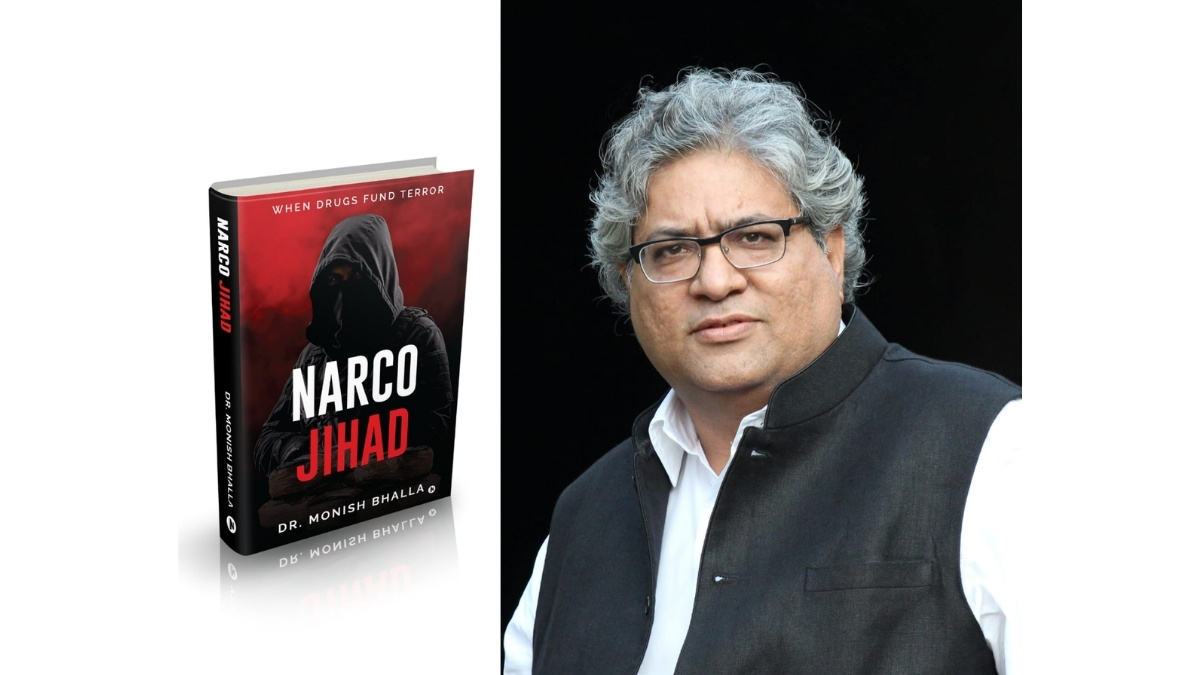
New Delhi [India], August 29: India today faces a silent yet devastating threat—one that doesn’t rely on missiles or tanks but on narcotics. Drugs are no longer just a law-and-order issue; they have been weaponised into a tool of hybrid warfare. In his explosive new book, Narco Jihad: When Drugs Fund Terror, former Narcotics Control Bureau officer Dr. Monish Bhalla reveals how Pakistan has systematically turned drug trafficking into a strategic weapon to destabilise India from within.
A Nation Under Siege: The Rise of Narco Jihad
Dr. Bhalla’s research exposes a chilling reality—what he terms “Narco Jihad.” This isn’t just about addicts or street-level peddlers; it’s a state-sponsored strategy of destabilisation. By flooding Indian markets with heroin, meth, and other synthetic drugs, Pakistan-backed networks aim to weaken India’s social fabric, finance terror operations, and wage a silent war without crossing borders.
Through real-world case studies and deep investigations, the book brings to light:
- Mundra Port Heroin Haul: Containers declared as “talc” concealed massive heroin consignments, pointing to multi-country networks and forged documentation. How multiple drug-laden containers slipped the vigilant eyes of Customs authorities.
- Dozens of Heroin-laden containers are arriving at Indian ports, and how funds are linked with Narco Jihad
- Drone Smuggling in Punjab & Rajasthan: Modern tech now fuels rural networks, creating an almost invisible supply chain, bypassing border security.
- Kerala’s Synthetic Drug Wave: Even economically advanced states are not immune when awareness and rehabilitation are weak.
Hawala networks and cryptocurrency pipelines fund terror outfits.
“Narco Jihad is not a drug problem—it is a national security threat,” says Dr.Bhalla.
Inside the Shadow Networks :
The book traces the heroin routes from Afghanistan through Pakistan into India, detailing how traditional smuggling has evolved into tech-enabled micro-distribution. It reveals the financial plumbing behind these operations, including hawala, shell companies, and trade-based laundering, which make tracking funds a nightmare for enforcement agencies.
Dr. Bhalla also highlights the role of Pakistan’s deep state in orchestrating this hybrid war. From Musharraf’s veiled admissions to Imran Khan’s careless disclosures or Asif’s recent televised confession, the author presents a decades-long pattern of complicity.
The book also links narco-funding directly to terrorism. “The Additional Solicitor General (ASG), representing the NIA, made a direct connection between the Mundra drug funds and the Pahalgam terror attack,” Dr. Bhalla notes, underscoring the stakes.
Why This Matters: A Wake-Up Call for Every Indian
Narco Jihad is not just a law enforcement challenge—it is a threat to India’s internal security, economy, and future generations. If India continues to treat drug seizures as isolated events, warns Dr. Bhalla, the country won’t need a conventional war to be destabilised.
The book advocates urgent reforms:
- Amend the 40-year-old NDPS Act, as it needs a total overhaul. A special provision for punishing Narco Jihadi
- Establish super-fast-track narco-terror courts.
- Tighten controls on chemical precursors.
- Overhaul rehabilitation frameworks to include mental health and community reintegration.
Beyond the Headlines: The Author’s Mission :
Shocked and moved by the Pahalgam terror attack of April 22, 2025, Dr. Bhalla uses his unique dual expertise—law enforcement and financial regulation—to connect the dots between narcotics and terrorism. “I have no agenda but the truth, no weapon but the pen, and no reward greater than awareness,” he writes.
Narco Jihad has nothing to do with any particular religion or ideologies, but is Pakistan’s Sinister plan to destabilise India.
The book aims to empower not just policymakers, but parents, teachers, and citizens. Early conversations at home, vigilance in schools, and community support for rehabilitation can help break the chain of demand.
Timeless Lessons for an Evolving Threat :
While the tools of this war evolve—heroin today, fentanyl tomorrow; sea routes today, drones and darknet channels tomorrow—the core doctrine remains unchanged: exploit addiction, fund terror, destabilise nations, destabilising on patterns rather than isolated incidents. Dr. Bhalla provides a strategic manual for countering this menace.
This is more than a book—it is a wake-up call. Read Dr. Monish Bhalla’s groundbreaking exposé today and join the effort to combat Narco Jihad before it’s too late.
If you have any objection to this press release content, kindly contact pr.error.rectification@gmail.com to notify us. We will respond and rectify the situation in the next 24 hours.
